
We Are a Pipeline for the Diamond Tool Market
Lieber & Solow is a supplier of rough natural and industrial diamonds for manufacturers, toolmakers, and industrial applications. Rough natural industrial diamonds are a crucial material for many traditional manufacturing processes, as well as new technologies and emerging applications. We partner with many great outlets around the globe to bring our customer base exactly what they want and need. And in many instances, go out of our way to get you what you want and need.
In short, working with Lieber and Solow is key to the most extensive supply line for the diamond tool market. We are proud to maintain a full inventory of all sizes, crystal types, orientations and price points. So please, do not hesitate to contact us today for more information.
When you reach out to us, we will gladly answer any and all questions you may have regarding our diamond selection. Our staff can also go over the various price points available to you. Lieber and Solow brings years of expertise in supplying high-quality natural rough diamonds to clients across the United States and around the globe. Based in New York City, we proudly serve customers worldwide with reliability and discretion. Our dedicated sourcing teams work diligently to ensure timely deliveries and a seamless experience every step of the way.
What Are Rough Natural Diamonds?
Rough natural diamonds are uncut, unprocessed diamond crystals that remain in their raw, untouched state—just as they formed beneath the Earth’s surface. These diamonds come in a range of naturally occurring shapes, including octahedrons, cubes, and triangles, which we offer in a variety of sizes and grades. Due to their irregular forms, rough natural diamonds provide diamond cutters with flexibility and creative freedom in how the final gem is shaped.
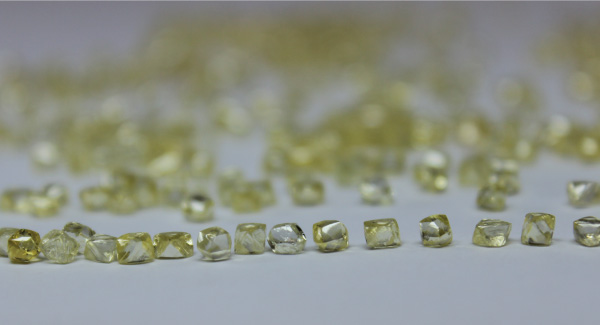 Also commonly referred to as “raw diamonds,” rough natural diamonds may display less brilliance than fully finished stones. This can be due to incomplete crystal development or the lack of cutting and polishing. Diamonds are formed deep underground through intense heat and pressure, which causes carbon atoms to bond in a structured lattice. When these diamonds are mined before full crystallization or without further refinement, they retain their rough, natural appearance.
We offer a wide selection of rough natural diamonds for industrial use, available at various price points to suit different needs. From premium, stress-free stones to more economical material grades, our inventory meets the demands of toolmakers and manufacturers alike. Shapes such as octahedrons and dodecahedrons are especially valuable for single-point dressing tools, as their natural geometry provides ready-to-use points. Each stone’s size, shape, and quality can be tailored to your budget and application.
What Are Natural Rough Diamonds Used For?
Rough natural diamonds have applications across a wide range of industrial and manufacturing processes. Their exceptional hardness and wear resistance make diamond an important material for applications where precision, durability, and long tool life are required.
Common applications for rough natural diamonds include:
- Single-point diamond dressing tools
- Diamond dressers
- Rotary dressing tools
- Form and profile dressers
- Precision cutting tools
- Grinding and abrasive applications
- Mining and exploration applications
- Material processing
- Manufacturing and machining
- Specialized diamond tooling
The appropriate rough diamond depends on the specific tool or manufacturing process. Factors such as crystal shape, size, orientation, quality, and the number of usable points can influence how a natural rough diamond performs in a particular application.
Natural Rough Diamonds for Industrial Applications
Lieber & Solow supplies rough natural diamonds for manufacturers, toolmakers, and other industrial applications requiring the unique properties of natural diamond. Our rough natural diamonds are available in a variety of sizes, crystal shapes, grades, and configurations to meet the requirements of different diamond tools and manufacturing processes.
Unlike polished diamonds intended primarily for jewelry, industrial rough diamonds are selected for their physical characteristics and performance in demanding applications. The natural crystal structure, hardness, thermal properties, and available crystal orientations can make rough natural diamonds valuable materials for precision tooling, dressing applications, and other industrial uses.
Our team works with customers to identify the appropriate rough diamond material based on the intended application, specifications, quantity, and budget.
Rough Natural Diamonds for Diamond Tool Manufacturers
Diamond tool manufacturers rely on consistent access to appropriate raw materials. Lieber & Solow maintains an extensive inventory of natural rough diamonds and works with customers to source material according to their specifications.
Our rough diamond inventory includes different sizes, crystal types, orientations, and price points. This allows manufacturers and toolmakers to select material according to the requirements of their particular application.
Whether you require rough diamonds for single-point dressing tools, rotary dressers, form tools, or another industrial application, our team can discuss the available material and help identify an appropriate solution.
Choosing the Right Rough Natural Diamond
Selecting a rough natural diamond for industrial use involves more than simply choosing a stone based on carat weight. The physical characteristics of the individual crystal can be important to its performance and suitability for a particular tool. Depending on the application, buyers may evaluate:
Crystal Shape
Natural diamonds occur in several crystal forms. Octahedral, cubic, dodecahedral, and other natural shapes can provide different characteristics for industrial applications.
Certain crystal geometries can be particularly useful for diamond dressing tools because they may provide naturally occurring points or orientations appropriate for the intended application.
Size
The required size of a rough natural diamond depends on the tool and application. Lieber & Solow maintains rough diamond inventory across a range of sizes and can help customers identify material appropriate for their requirements.
Crystal Orientation
Crystal orientation can be an important consideration when selecting natural rough diamonds for precision tooling. The orientation of the diamond crystal can influence how the material behaves during manufacturing and how the finished tool performs.
Quality and Grade
Rough natural diamonds are available in different grades and quality levels. The appropriate grade depends on the intended use, required performance, and application specifications.
For industrial customers, selecting the right material can help balance performance requirements with overall tooling costs.
Industrial Rough Diamond Grades
Industrial rough diamonds can be classified according to characteristics that affect their usefulness in tooling applications. Different grades may have different numbers of usable points, crystal characteristics, inclusions, fractures, and other features.
For example, certain utility grades may be appropriate for applications where cost efficiency is more important than having multiple high-quality settable points. Higher-quality material may be selected when the application requires specific crystal characteristics or performance.
Because the requirements vary from one tool to another, our specialists can help customers determine which rough natural diamond grade is appropriate for their application.
Frequently Asked Questions About Rough Natural Diamonds
Below are a few frequently asked questions regarding rough natural diamonds and the diamond market.
What are rough natural diamonds?
Rough natural diamonds are diamonds in their natural, uncut crystal form. They have not been cut and polished into finished gemstones. For industrial applications, rough diamonds can be selected based on their crystal shape, size, orientation, quality, and other physical characteristics.
What are rough natural diamonds used for?
Rough natural diamonds are used in a variety of industrial applications, including diamond dressing tools, precision tooling, grinding applications, material processing, manufacturing, mining, and exploration.
What is the difference between rough diamonds and polished diamonds?
Rough diamonds are natural, uncut crystals, while polished diamonds have been cut and finished to create specific shapes and facets. Industrial buyers may use rough diamonds because their natural crystal characteristics can be valuable in specialized tooling applications.
Are rough natural diamonds used to make diamond tools?
Yes. Rough natural diamonds can be used as the source material for a variety of diamond tools, including single-point dressers, rotary dressers, form dressers, and other specialized tooling.
How do I choose a rough natural diamond for industrial use?
The appropriate rough natural diamond depends on the application. Buyers may need to consider crystal shape, size, orientation, grade, number of usable points, quality, and budget. An experienced industrial diamond supplier can help identify suitable material for a specific application.
Does Lieber & Solow sell industrial rough diamonds?
Yes. Lieber & Solow supplies natural industrial diamonds and rough natural diamonds for manufacturers, toolmakers, and other industrial customers. The company maintains inventory in a range of sizes, crystal types, orientations, and price points.